

IUD vs. Implanon: Comparing Long-Acting Contraceptive Options
Choosing a contraceptive method is a personal decision, and for many people, the appeal of long-acting options comes down to one thing: not having to think about it every day. At Supernova Medical Centre, we offer both IUD and Implanon insertion and removal, so if you’re weighing up which option suits you, here’s what actually sets them apart.
What They Have in Common
Both the IUD (intrauterine device) and Implanon (the contraceptive implant) fall into a category called Long-Acting Reversible Contraception, or LARC. They’re both:
- Highly effective, with failure rates well under 1%
- Reversible, meaning fertility typically returns quickly after removal
- Low-maintenance, requiring no daily action once inserted
- Inserted and removed by a trained doctor during a short procedure
Beyond that, the two methods work quite differently, and the right choice depends on your body, your health history, and your personal preferences.
What Is Implanon?
Implanon is a small, flexible rod about the size of a matchstick, inserted just under the skin of your upper arm. It releases a steady, low dose of the hormone progestogen, which prevents ovulation.
Key points about Implanon:
- Lasts up to three years before it needs replacing
- Inserted and removed via a quick procedure under local anaesthetic, usually taking just a few minutes
- Doesn’t contain oestrogen, making it a suitable option for people who can’t use oestrogen-based contraception
- Common side effects can include changes to your bleeding pattern, particularly in the first few months
Because the procedure is minimally invasive and doesn’t involve the uterus, many people find Implanon appealing as a lower-intervention option.
What Is an IUD?
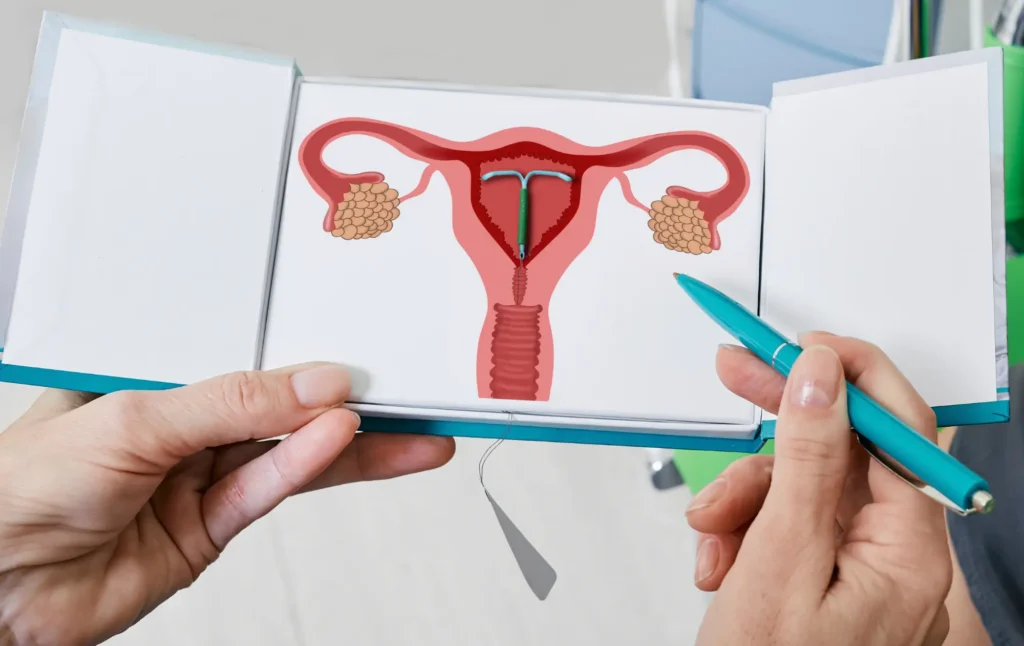
An IUD is a small, T-shaped device inserted into the uterus. There are two main types:
Hormonal IUDs release a localised dose of progestogen directly into the uterus, which thins the uterine lining and often reduces or stops periods altogether over time. These typically last five to eight years, depending on the specific device.
Copper IUDs contain no hormones at all. Instead, copper creates an environment that’s inhospitable to sperm. These can last up to ten years and are a good option for people who prefer to avoid hormonal contraception entirely.
Key points about IUDs:
- Inserted directly through the cervix into the uterus, a slightly more involved procedure than Implanon
- Some people experience cramping or discomfort during and shortly after insertion
- Hormonal IUDs often lead to lighter periods over time; copper IUDs may initially make periods heavier
- Longer-lasting than Implanon, which appeals to people looking for a “set and forget” option over several years
Comparing the Two: What Might Influence Your Choice
Duration: If you’re looking for the longest possible gap between procedures, a hormonal or copper IUD generally outlasts Implanon.
Hormone preference: If you want to avoid hormones altogether, the copper IUD is the only option between the two that’s fully hormone-free.
Procedure comfort: Implanon insertion is generally quicker and less invasive than an IUD insertion, which some people find an important factor in their decision.
Period changes: Hormonal IUDs often reduce period symptoms significantly, sometimes stopping periods altogether, which can be a deciding factor for people with heavy or painful periods.
Removability and reversibility: Both are removed by a doctor, and fertility typically returns quickly after removal for either method.
There’s no universally “better” option here. It genuinely comes down to your health history, your comfort with each procedure, and what you want your periods and hormone levels to look like over the next several years.
What to Expect at Your Appointment
At Supernova, IUD and Implanon insertions and removals are handled by our GPs as part of our women’s health services. Your appointment typically involves:
- A consultation to discuss your medical history, current contraception, and what you’re hoping to achieve
- A discussion of both options, including risks, benefits, and what the procedure itself involves
- The procedure itself, performed in-clinic, with local anaesthetic used where relevant
- Aftercare guidance, including what’s normal to experience afterward and when to follow up
If you’re currently using one method and considering switching, that’s a completely normal conversation to have with your GP. Removal and reinsertion (or a switch to the other method) can often be arranged in the same visit, depending on your circumstances.
Is There Anything That Rules Either Option Out?
Certain medical histories, such as some hormone-sensitive conditions, uterine abnormalities, or current infections, may affect which option is suitable for you. This is exactly why the consultation step matters. Your GP will talk through your history before recommending or proceeding with either method.
Booking Your Consultation
If you’re considering long-acting contraception and want to talk through what’s right for you, book an appointment with one of our GPs at Supernova Medical Centre. You can book online for the next available appointment or call our reception on 03 8866 5544.
Whichever option you’re leaning toward, the most important step is an honest conversation about your health, your lifestyle, and what you want your contraception to look like for the next few years.