

About Stress Echocardiograms
Assessing how your heart responds to increased activity.A stress echocardiogram, commonly called a Stress Echo, is a cardiac investigation used to assess how the heart functions when its workload increases. It combines ultrasound imaging with a controlled stress test to compare the heart’s function at rest and under increased demand.
Depending on your medical circumstances, stress may be produced through supervised exercise or, in selected cases, medication administered under medical supervision.
Your doctor may recommend a Stress Echo to investigate certain symptoms, assess suspected coronary artery disease or obtain additional information about your heart’s response to increased workload.
Heart Function Under Stress
Ultrasound images help clinicians assess how the heart’s pumping function and wall movement change when its workload increases.
Cardiac Response Monitoring
Heart rate, blood pressure, symptoms and electrical activity may be monitored throughout the examination.
Clinical Findings & Follow-Up
The results can assist your referring practitioner in determining whether further cardiovascular assessment or management is required.

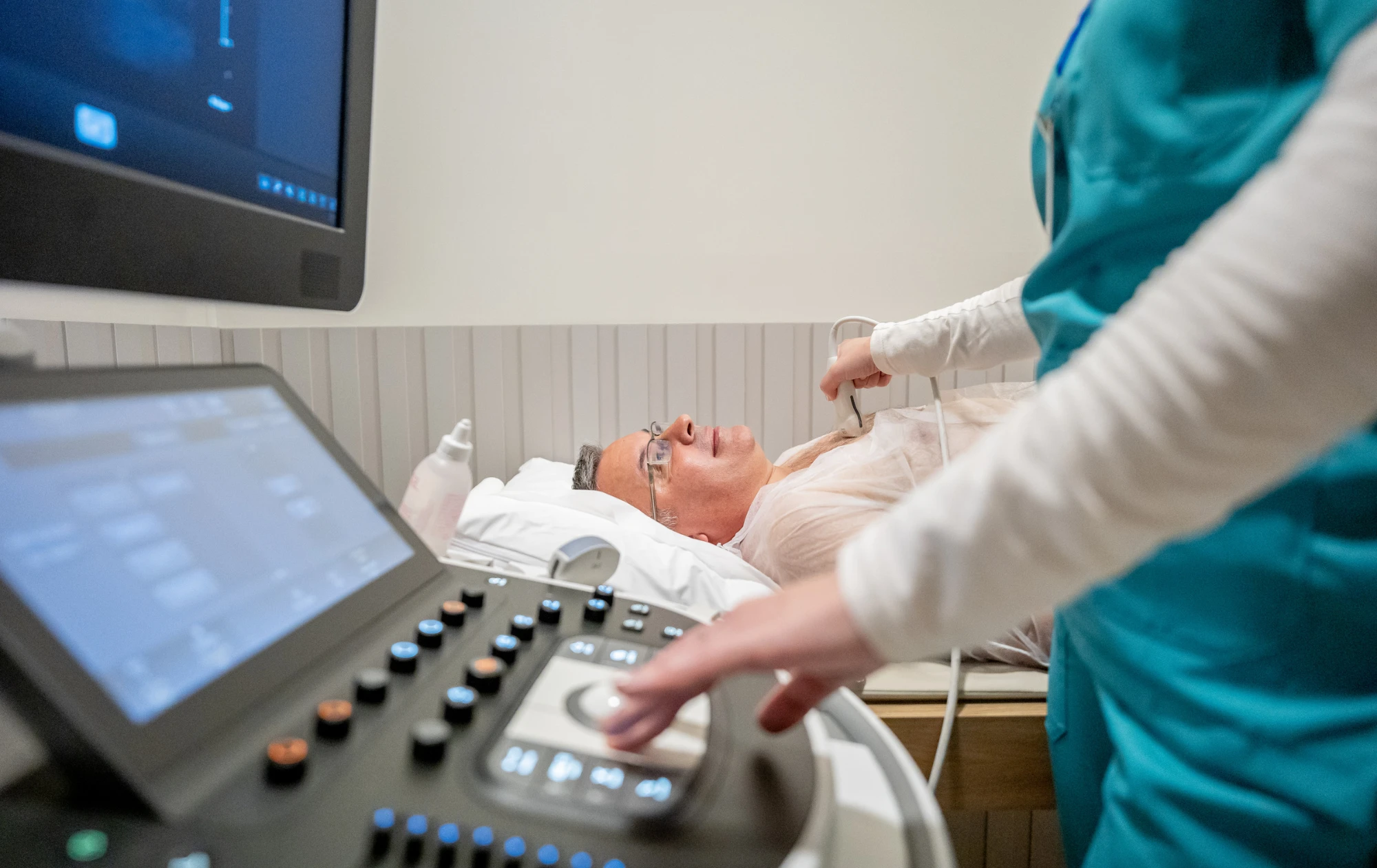
Examining your heart’s response to increased workload.
Stress echocardiography combines cardiac ultrasound with controlled stress to evaluate changes in heart function. The examination and monitoring involved depend on your clinical needs and the testing protocol.
Stress Echocardiogram
Cardiac Response to Exercise
Exercise Stress Assessment
Heart Rate & Blood Pressure Monitoring
Resting Heart Function Assessment
Suspected Coronary Disease Assessment
Heart Wall Motion Assessment
Stress Echo Results & Follow-Up
Meet the healthcare professionals involved in your care.






Cardiac assessment guided by your clinical needs.
A Stress Echo may provide additional information when a resting heart assessment does not fully explain certain symptoms. Clinical assessment, appropriate test selection and interpretation are important parts of the process.
Assessment Before Testing
Your medical history, symptoms and relevant risk factors are reviewed to help determine whether a Stress Echo is suitable.
Controlled Cardiac Stress
The examination evaluates heart function during increased workload, with monitoring appropriate to the testing method.
Clinical Interpretation
The results are considered alongside your symptoms, medical history and other investigations.
Follow-Up & Further Care
Your referring practitioner can discuss whether additional testing, specialist assessment or ongoing management is appropriate.
What to expect during your Stress Echo.
A Stress Echo involves preparation, supervised testing and follow-up. Understanding the process can help you know what to expect on the day.
1
Arrange Your Appointment
Contact our team to discuss Stress Echo appointments, referral requirements, test availability and applicable fees.
3
Complete Your Stress Echo
Ultrasound images are obtained at rest and during or immediately after increased cardiac workload. Your heart rate, blood pressure and symptoms are monitored as appropriate throughout the test.
2
Prepare for Your Test
Follow the preparation instructions provided by the testing team. These may include advice about clothing, meals, caffeine and certain medications. Do not stop prescribed medicines unless your treating clinician advises you to do so.
3
Receive Personalised Care
Following a thorough assessment, we'll recommend a tailored treatment plan designed to support your health, recovery, and long-term wellbeing.
4
Review Your Results
Your referring practitioner receives the investigation report and can explain the findings, including whether further assessment or follow-up is recommended.
Everything you need to know before your Stress Echo.
A stress echocardiogram combines ultrasound imaging with controlled cardiac stress to assess how the heart functions when its workload increases. It allows clinicians to compare heart function at rest and under stress.
A Stress Echo may be recommended to investigate symptoms such as chest discomfort or exertional breathlessness, assess suspected coronary artery disease or evaluate certain cardiovascular concerns.
A standard Echo assesses the heart’s structure and function at rest. A Stress Echo compares heart function at rest and during or immediately after increased workload, helping identify changes that may not be apparent during a resting examination.
The examination usually begins with resting ultrasound images. Cardiac stress is then produced through supervised exercise or, where appropriate, medication. Additional ultrasound images are obtained to assess changes in heart function.
The ultrasound component is generally well tolerated. Exercise may cause temporary breathlessness or fatigue, and some people may experience symptoms during testing. The clinical team monitors your response throughout the examination.
A Stress Echo appointment commonly takes approximately 45–90 minutes, depending on the testing protocol, preparation and recovery requirements.
Preparation depends on the type of stress test. You may receive instructions about comfortable clothing, food, caffeine and medications. Follow the testing team’s advice and do not stop prescribed medicines without medical guidance.
No. Certain medical conditions, symptoms or clinical findings may make stress testing unsuitable or require additional precautions. Your healthcare practitioner will assess your suitability before the investigation.
Stress echocardiography may cause symptoms such as fatigue, dizziness, chest discomfort or changes in heart rhythm. Serious complications are uncommon but can occur. Your testing team should explain the relevant risks and monitoring arrangements before the procedure.
A referral is generally required for Medicare-funded stress echocardiography. Your referring practitioner can determine whether the investigation is clinically appropriate.
Medicare rebates may apply when the relevant clinical indications, referral requirements and eligibility criteria are met. Fees and out-of-pocket costs vary between providers.
The investigation findings are generally reported to your referring practitioner. Reporting times vary, and your practitioner can arrange a consultation to explain the results and discuss any recommended next steps.

Here When You Need Us
Need further assessment of your heart health?
Discuss your symptoms and cardiovascular concerns with our medical team to determine whether a Stress Echo or another investigation may be appropriate.